A single large play structure, however well built, is less likely to carry a commercial venue on its own. Families have more choices nearby, and they are more selective about where they spend. For family entertainment center (FEC) owners, the question in 2026 has shifted from "which equipment should we buy?" to "how do the attractions, space, staffing and guest flow work together?"
That shift was visible across the industry this year. IAAPA Expo 2026 in Orlando (November 16–20) was the largest edition yet, with 39,550 verified attendees from buying and supplier companies across 102 countries and nearly 1,400 exhibitors. A show that size does not prove any single trend. It does show where the global attractions industry is putting its attention, and this article uses it as one reference point alongside market research and operator-focused analysis.
Below are the indoor playground trends worth planning around, and how to turn each into a practical decision.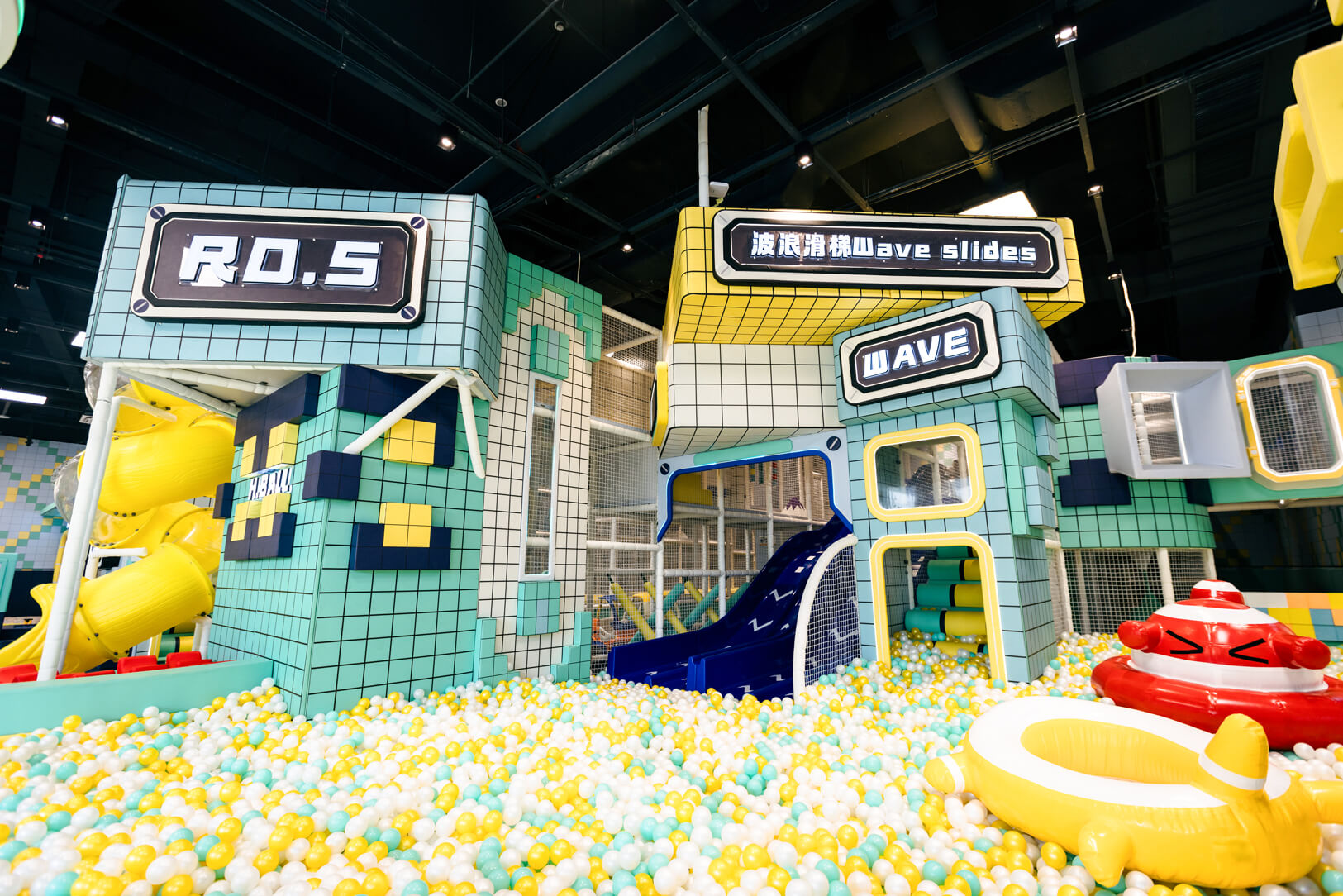
The "one big soft play structure" model is giving way to venues that combine several play formats under one roof. This matches what the wider FEC market describes. An IAAPA Funworld analysis published in September 2026 says the era of building around one hero attraction is giving way to hybrid venues, where every person in a group has something to do and a reason to stay longer.
In an indoor playground, that usually means pairing formats that serve different needs:
The commercial logic is straightforward: wider age appeal, more varied sessions, more group activities, and more reasons to return. JLL's 2026 location-based entertainment research points the same way. It reports that trampoline parks and kid zones account for 1,355 existing U.S. and Canadian locations and 61% of planned entertainment square footage, and that the leading operators have layered ropes courses, climbing walls and slides on top of a trampoline base.
Practical advice: Do not add attractions just to make a venue look bigger. Choose combinations from your target ages, floor area, ceiling height, visitor flow, staffing and maintenance capacity. Each attraction should answer a specific question: which guest does it serve, and how does it earn its footprint?
Colorful but generic play structures are easy to copy, and guests rarely remember them. Themed environments give a venue an identity that photographs well, supports birthday party packages, and is harder for a nearby competitor to match.
Industry commentary supports the direction. The same Funworld piece expects more storytelling and themed environments as FECs move toward being complete social destinations.
For indoor playground design, "immersive" does not need to mean expensive technology. It can mean a coherent story across zones, consistent materials and color, custom features that guests cannot find elsewhere, and attractions that feel like part of one world instead of separate products placed side by side. A theme should also be designed around real play value. A beautiful feature that kids cannot use repeatedly will not pay back.
Practical advice: Define the story and the target guest before choosing equipment. Check that every themed element can be cleaned, repaired and replaced without taking a whole zone offline.
When operators talk about economics, the recurring phrase is revenue per square foot. The IAAPA analysis says operators are looking harder at experience, value, labor and revenue per square foot, and that large attractions with questionable throughput will face more scrutiny.
Good indoor playground space planning usually means:
Scale context helps here. In JLL's study, leading kid-zone formats occupy boxes of roughly 20,000 to 60,000 square feet, but a smaller venue can succeed by being more focused instead of trying to copy a large format.
Venues that serve only toddlers or only older kids leave revenue on the table. Operators increasingly want a mix that works across ages, and the market is signaling demand: JLL notes the leading action-park format targets children aged 2 to 14.
The IAAPA piece also anticipates more active entertainment designed for multiple generations, with greater emphasis on accessibility and inclusivity. A 2026 analysis from mixed-reality vendor Valo Motion, written after IAAPA Expo 2025, recommends sensory-friendly spaces such as quiet zones and low-stimulation rooms as low-cost upgrades that widen the audience. (Valo Motion sells attractions, so this is vendor commentary.)
Practical advice: Map your attractions against age bands (roughly 0–3, 4–7, 8–12, and teens or adults). Gaps in the map are where you lose visits. Also consider the parent's experience, because comfortable seating and good sightlines often decide whether a family stays another hour.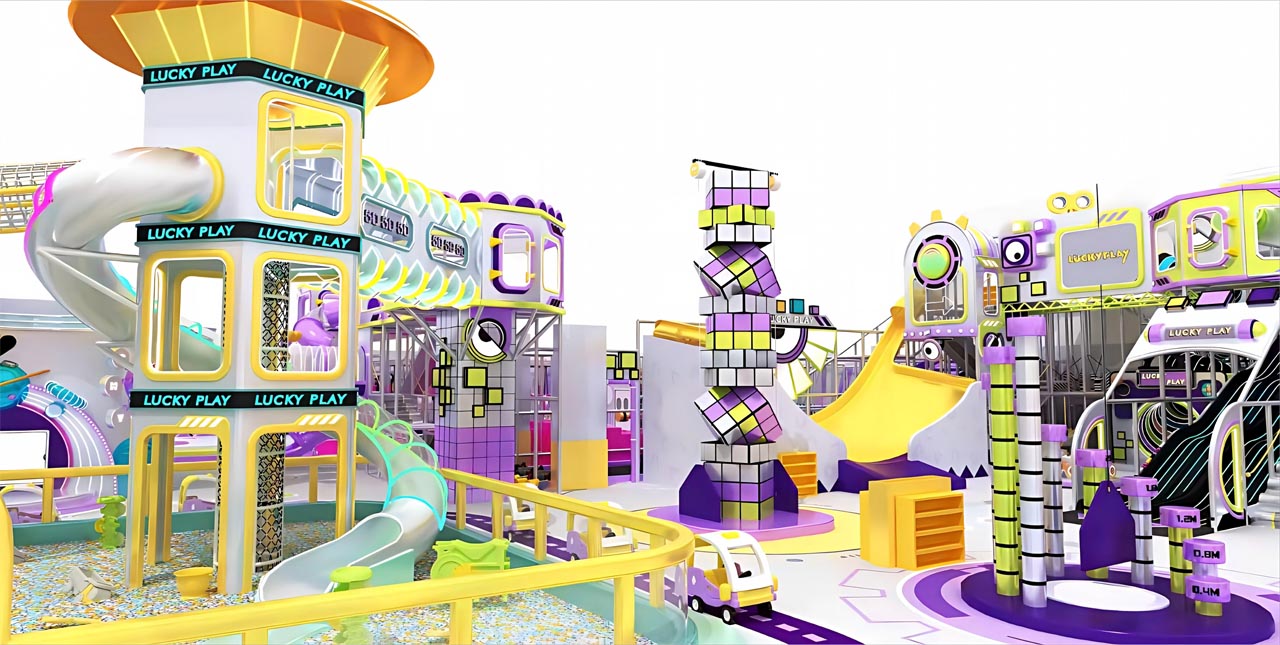
A more varied venue is also a more complex one. Valo Motion's analysis notes that hybrid venues can bring specialist staffing needs, heavier maintenance schedules and more downtime risk, and that operators are leaning toward attractions that run reliably with limited supervision. The IAAPA article makes a related point about labor and maintenance weighing more heavily than the "wow" factor.
For indoor playgrounds, this should influence decisions at the design stage:
Safety is not a trend, but it is where trend-chasing most often goes wrong. A feature that looks exciting but is hard to supervise or maintain is a liability, not an asset.
The strongest 2026 signal on technology is a skeptical one. The IAAPA analysis argues that technology for technology's sake is likely to fade, because guests care whether an experience is worth repeating, not how sophisticated it is. Where technology does matter, it is often behind the scenes: cashless and connected systems, better data, and AI used for scheduling labor, pricing and marketing.
For indoor playground owners, this suggests a practical order of priorities: get the physical play experience right first, then add booking, waivers, cashless payment and data tools that make operations smoother. Digital add-ons that need constant technical support can erode the low-maintenance advantage that good physical play equipment offers.
Play equipment brings families in, but the broader visit determines revenue. JLL reports average dwell time of 140 minutes per visit across 20 tracked entertainment concepts, and says kid-zone operators have built recurring revenue on birthday parties, weekends and school breaks. The IAAPA analysis adds that food and beverage is increasingly treated as an attraction and a revenue driver, and that value (bundles, memberships, clear packages) matters more as families watch their spending.
Practical advice: Plan party rooms, seating and food service in the first layout, not as an afterthought. Decide early which of these you will run yourself and which you will partner on.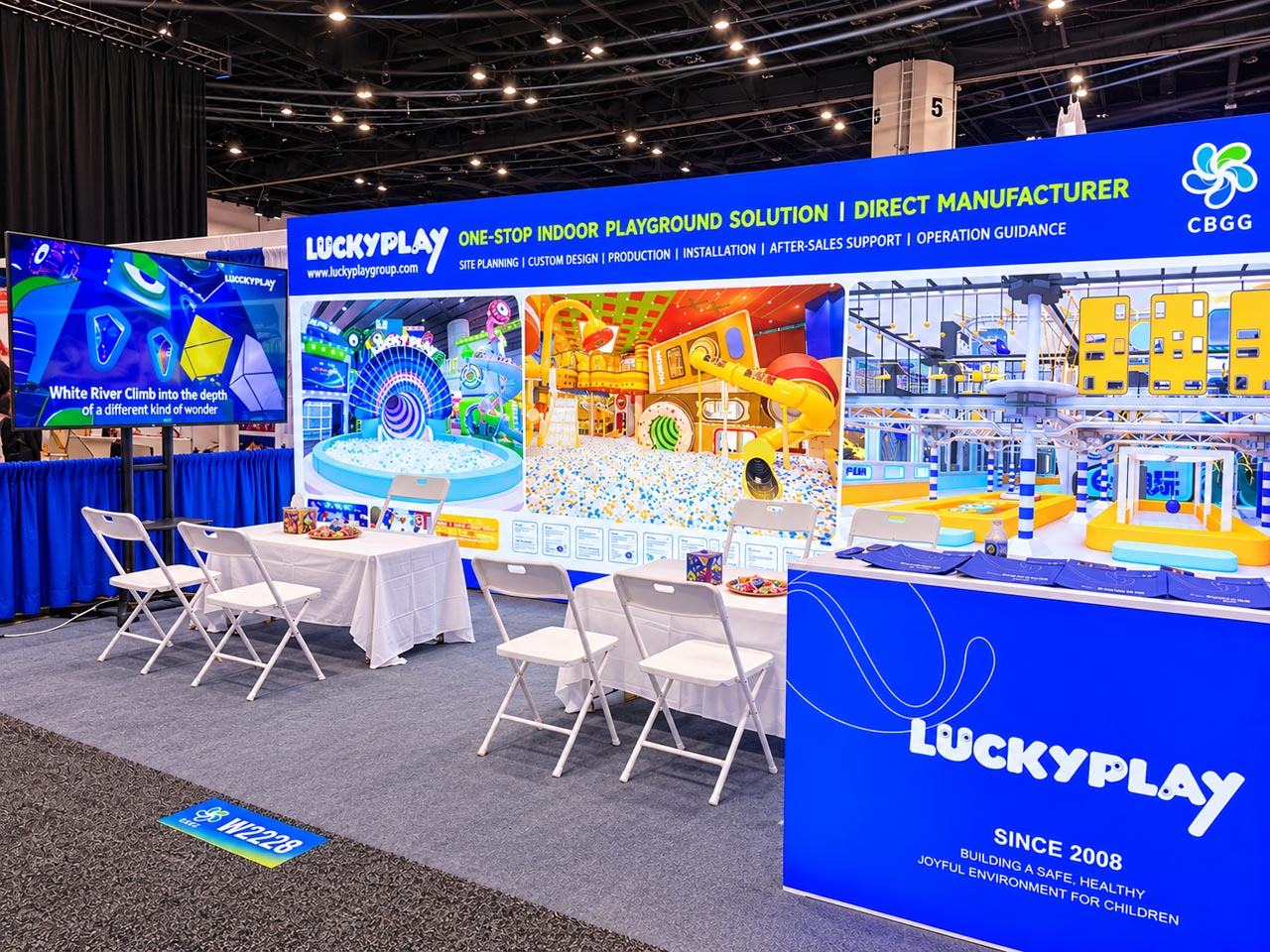
It is worth being precise here. According to IAAPA's post-show announcement, Expo 2026 was the largest ever, with 28,545 qualified buyers representing 20,408 companies, 634,000 square feet of exhibit space, and nearly 200 education sessions. The headline project announcements in that release were mostly roller coasters, water rides and large themed developments, not indoor playgrounds specifically.
So the show confirms the scale and international reach of the attractions business, and it is a useful place to see what suppliers and operators are discussing. It does not, by itself, prove that any particular indoor playground trend has been "confirmed." The trends in this article come from the combination of market research, trade analysis and operator-facing commentary cited throughout.
For existing venues, a full rebuild is rarely the first question. Valo Motion's analysis argues that targeted upgrades can deliver better return than costly new builds, citing refreshed party spaces, improved food menus, inclusive features and updated signage. A commercial indoor playground renovation often works the same way: replace or add the zones that are underperforming, keep what still earns, and refresh the theme where it feels dated.
Before committing to a new indoor playground or an upgrade, answer these:
A good partner should start with your goals, not a catalog. Look for a team that can translate a floor plan and target audience into a layout, review the engineering, control quality in manufacturing, handle installation, and support you after opening.
This is the part of the market Luckyplay works in. Luckyplay designs, manufactures and installs custom indoor playground solutions, including soft play, ninja courses, rope adventures, slides and matrix slides, and interactive wall challenges, always for indoor commercial projects.
The central indoor playground trend of 2026 is not any one attraction. It is the move from selling equipment to designing a whole guest experience that is varied enough to draw different ages, distinctive enough to be remembered, and practical enough to run profitably. Owners who plan around space, staffing and maintenance, and who treat themes, parties and food as part of the product, are better placed than those who simply buy the newest feature.
If you are planning a new venue or refreshing an existing one, bring your floor plan, target audience and budget range to Luckyplay for a layout discussion.
What are the main indoor playground trends in 2026?
Multi-attraction layouts, stronger themes, smarter use of space and height, designs for several age groups, lower-maintenance operations, and a focus on dwell time through parties and food.
Why are FEC owners moving beyond a single play structure?
A mix of attractions appeals to more ages and gives families more reasons to return, which supports repeat visits and party bookings.
Does technology matter for an indoor playground?
Useful technology (booking, payments, data) helps operations, but trade analysis suggests guests care more about whether the experience is fun enough to repeat.
Is renovation better than building new?
Often a targeted renovation of underperforming zones is the lower-risk first step, though it depends on the venue's condition and goals.